Full grain leather keeps the complete outer surface of the hide, so it is the strongest and longest-lasting choice for the outer layer of a weightlifting belt. Top grain leather has that surface sanded and refinished, which makes it smoother and more even but slightly weaker. Split and bonded leathers belong inside a belt or nowhere near one.
This guide is for brands choosing leather for a belt line. It explains the leather grades, how tanning changes stiffness, how a thick belt is actually built from layers and what to write in your spec so every batch feels the same as your approved sample.
What Do Full Grain and Top Grain Actually Mean?
A cattle hide has a dense outer layer called the grain and a looser fibrous layer underneath called the corium. The tightly packed fibers near the grain give leather most of its strength and resistance to scuffing.
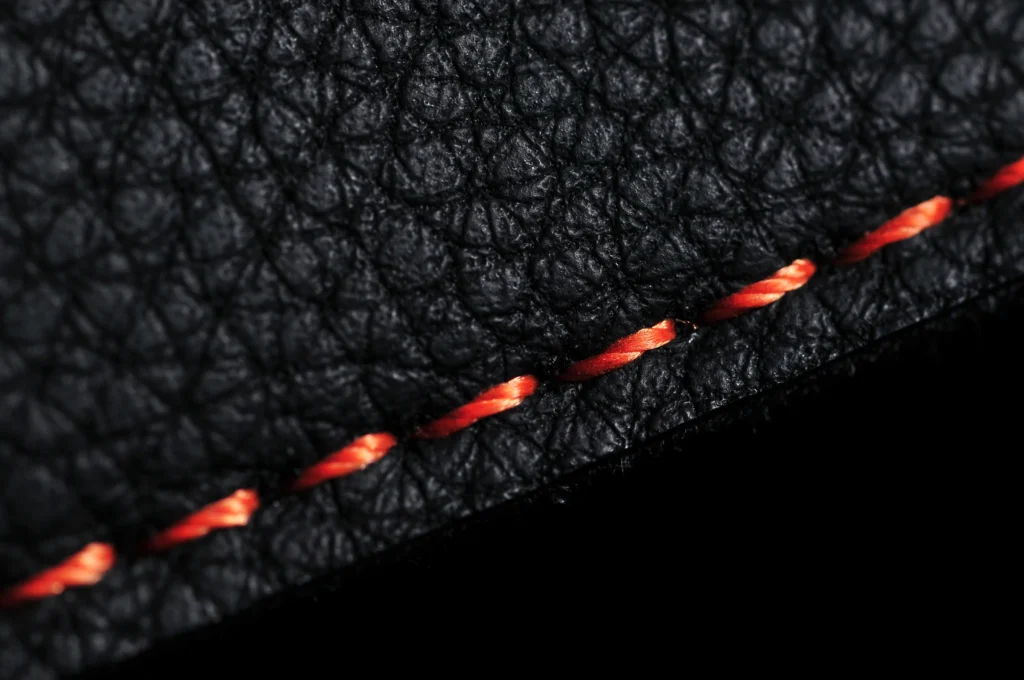
Full grain leather keeps that outer layer intact. Natural marks, pores and small scars stay visible, and the surface develops a darker patina as the belt is used.
Top grain leather starts from the same upper part of the hide, but the surface is sanded or buffed to remove marks, then finished with a coating or an embossed grain pattern. It looks cleaner and more uniform, but sanding removes some of the strongest fibers.
When a hide is split into layers, the lower piece is called split leather. It has no grain surface, so it is often finished as suede or coated to look like grain leather. Bonded leather is not a hide at all: it is leather fibers mixed with binders and pressed into sheets.
How Do the Leather Grades Compare for a Lifting Belt?
The table below compares the four grades you will see in supplier quotes, and where each one fits in a belt.
| Grade | Surface | Strength and Wear | Typical Place in a Belt |
|---|---|---|---|
| Full grain | Natural grain, marks visible | Highest, ages with a patina | Outer layer of premium and competition belts |
| Top grain | Sanded and refinished, uniform look | High, slightly below full grain | Outer layer of mid-range belts, colored belts |
| Split leather or suede | No grain, fuzzy or coated | Lower on its own | Inner lining facing the body, or a core layer |
| Bonded leather | Pressed fiber sheet | Low, can crack and peel | Not suitable for lifting belts |
A suede lining is not a sign of a cheap belt. Many well-known powerlifting belts use suede on the inside because it grips clothing and stops the belt sliding during a squat. What matters is that the load-carrying layers are proper hide leather.
How Does Tanning Change the Way a Belt Feels?
Tanning turns raw hide into stable leather, and the method changes how firm the finished belt feels. Two methods dominate, and many tanneries also combine them.
| Tanning Method | Feel | Moisture | Belt Use |
|---|---|---|---|
| Vegetable tanned | Firm, holds its shape, softens slowly with use | Sensitive to soaking and heat | Stiff powerlifting belts, natural or dyed color |
| Chrome tanned | Softer and more flexible from new | Handles sweat and humidity better | Comfort-focused belts and bright colors |
| Combination tanned | Between the two, depending on the recipe | Moderate | Balanced training belts |
For a stiff squat and deadlift belt, firmness is the goal, so vegetable or combination tanned leather is the common choice. For a general gym belt that customers expect to feel comfortable on day one, a softer tannage reduces complaints about a long break-in.
How Is a Thick Lifting Belt Built?
Very few belts are a single slab of leather. A typical 10 mm or 13 mm belt is built from layers that are glued, pressed and stitched together.
Outer Layer
The visible face, usually full grain or top grain hide. It takes the logo by embossing, debossing or printing.
Core Layer
One or more inner layers that build thickness and stiffness. This is where weaker leather is sometimes hidden, so specify it.
Lining
Suede or split leather facing the body for grip and comfort, stitched through to the outer layers.
Edges and Stitching
Edges are trimmed, sanded and sealed so they do not fray. Rows of heavy thread hold the layers together under load.
Total thickness is measured through every layer. If you sell to competitive powerlifters, keep within the published federation limits. Summaries of the IPF Technical Rules commonly list a maximum width of 10 cm and a maximum thickness of 13 mm, and competition use can also depend on approved equipment lists, so check the current rulebook before printing any competition claim.
How Can You Check Leather on a Sample?
You do not need a laboratory to spot most problems. These simple checks on a sample belt tell you a lot about the leather inside it.
- Look at a cut edge: real layered hide shows fibers, while bonded leather looks like pressed paper
- Check the surface under strong light: an evenly embossed pattern with no pores suggests corrected top grain
- Bend the belt around your hand: it should flex without cracking or wrinkling on the face
- Press a fingernail into the face: full grain marks and recovers, heavy coatings may crack
- Measure thickness at several points: a good belt holds the same figure along its length
- Pull on the lining edge: it should not lift away from the core layers
Keep the approved sample. Every bulk lot should be compared with it for thickness, stiffness, color and edge finish, so customers who reorder receive the same belt they liked.
What Should Your Leather Belt Spec Say?
A belt spec that only says genuine leather leaves too much open. Write each layer down so the factory, and any inspector, knows exactly what to expect.
| Spec Line | Example of a Clear Entry |
|---|---|
| Outer layer | Full grain cowhide, vegetable tanned, natural brown |
| Core | Hide leather layers to reach total thickness, no bonded leather |
| Lining | Suede split, black |
| Thickness | Total thickness with a tolerance, measured at three points |
| Width | Constant width front to back, or tapered, with measurements |
| Edges | Sanded, dyed and sealed, color stated |
| Stitching | Thread type, color and number of rows |
| Hardware | Prong, double prong or lever, with finish |
Our tech pack guide shows how to lay out these details alongside drawings and sizes.
How Do These Choices Shape Your Factory Order?
Leather grade and tannage are usually the biggest material decisions on a belt quote, followed by thickness and hardware. Settling them early lets the factory source the right hides before your sample is cut.
At Oath and Oak, we suggest sampling the outer leather you plan to use in the color you plan to sell, because dye and finish change how a grade looks. Hides vary naturally, so we match each lot to your approved sample for surface, thickness and stiffness before cutting.
If you want both a premium and an entry belt, a common setup is full grain on the premium line and top grain on the entry line, with the same pattern and hardware so the range looks like one family. You can see the styles on our leather weightlifting belt and powerlifting belt pages.
Which Leather Mistakes Should Belt Brands Avoid?
Writing Only Genuine Leather
The phrase covers several grades, so the factory may choose a lower one than you expected.
Ignoring the Core Layers
A full grain face over weak core layers looks premium but wears out early under heavy use.
Choosing Softness for a Squat Belt
A very soft tannage feels pleasant but gives less of the rigid support powerlifters buy a belt for.
Approving a Sample in a Different Color
Dye and finish change the look and feel of leather, so sample the exact color you will sell.
No Thickness Tolerance
Without a stated tolerance, small variations between hides turn into disputes at inspection.
What Else Do Brands Ask About Leather for Weightlifting Belts?
Is full grain always better than top grain?
For strength and aging, yes. Top grain can still make a good belt, and its more uniform surface takes bright colors and printed logos well, so it suits some ranges better.
Why do some belts have suede on both sides?
Suede on both faces gives a soft, grippy look that some brands prefer. The strength still has to come from hide layers inside, so ask what the core is made of.
How long does a stiff leather belt take to break in?
It depends on the leather and how often the customer trains. A firm vegetable tanned belt often needs several sessions before it shapes to the body, so say so on the insert card.
Can leather belts be made in bright colors?
Yes. Chrome and combination tanned leathers take bright dyes evenly. Natural vegetable tanned leather can also be dyed, but colors usually come out deeper and less uniform.
How should customers care for a leather belt?
Wipe off sweat and chalk after training, let it dry at room temperature away from heaters and apply leather conditioner now and then to stop the surface drying and cracking.