A good weightlifting belt size chart is based on the waist measured where the belt sits, not on pant size, and uses overlapping ranges so most lifters land comfortably inside one size. Get this right and returns drop sharply.
This guide is for brands planning their own belt line. It covers where customers should measure, how published charts differ, how many sizes to offer and how hole spacing and lever placement shape the fit.
What Is a Belt Size Chart?
It is a table that matches each belt size, usually XS to XXL or beyond, to a range of waist measurements. Customers measure themselves, find the range that includes their number and order that size.
Behind the chart sit three product decisions: the total belt length for each size, where the holes or lever sit, and how much adjustment each size allows. The chart only works when all three are planned together.
A clear weightlifting belt size chart also sells. Shoppers who can see exactly which size fits them buy with more confidence, and fewer of them order two sizes to try at home.
Where Should Lifters Measure for a Belt?
Customers should wrap a tape around the waist at the height where the belt will be worn, which for most lifters is around or just above the navel. Pant size is a poor guide, because pants usually sit lower on the hips.
Brands give slightly different instructions. SBD tells lifters to measure where the belt sits with the abdomen braced, while Inzer suggests measuring about four inches above the pants in a relaxed state.
Pick one method, explain it clearly and use it for every size in your range.
Two small details prevent many sizing complaints. Ask customers to measure standing, since sitting can add to the reading, and to add an inch or two if they usually lift in thick layers.
How Much Do Published Charts Differ?
Quite a lot. The table below shows example published ranges for a medium and a large belt from three well-known brands, in inches.
| Brand and Belt | Medium | Large |
|---|---|---|
| SBD belt guide | 28.5 to 35.5 | 31.5 to 39.5 |
| Inzer lever belt | 30 to 33 | 34 to 38 |
| Rogue 13 mm lever belt | 31 to 40 | 35 to 44 |
The gaps come from belt length, hole count and how each brand expects the belt to be worn. That is why your own chart must come from your own samples, not from a competitor’s numbers.
How Do Holes and Levers Affect Lifting Belt Sizes?
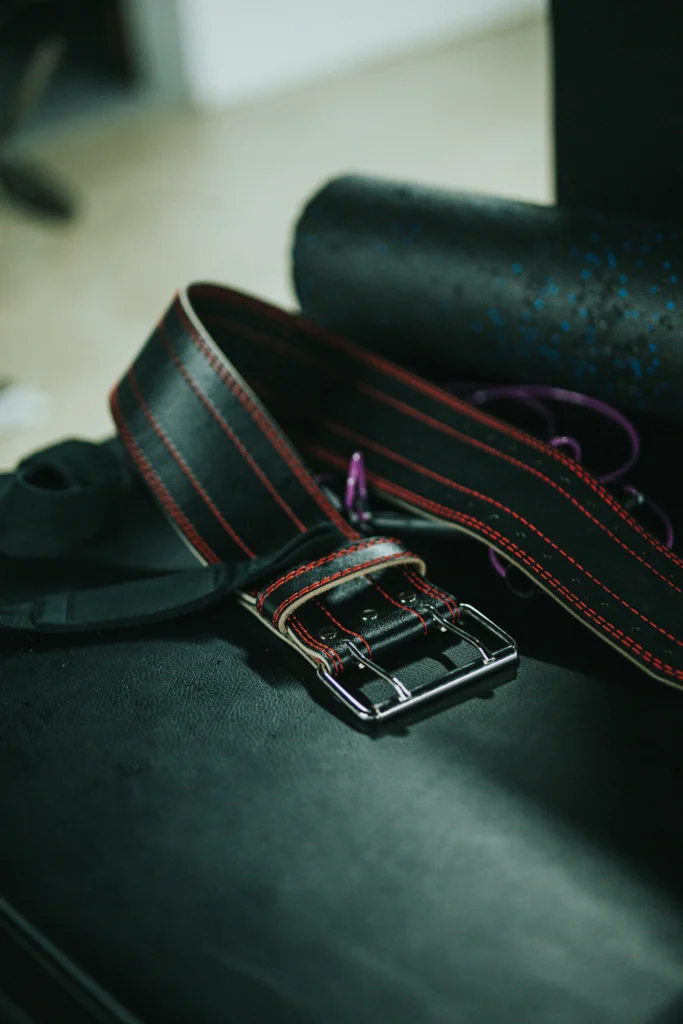
Prong belts carry a row of holes, often spaced about one inch apart. More holes give each size a wider range, while a few holes on either side of the target waist keep the tongue neat once the belt is closed.
Lever belts are less forgiving. The lever is screwed to the belt at one position, so moving it means unscrewing and refitting it. A customer between sizes notices this far more than with a prong belt, which makes accurate ranges essential.
Nylon belts with hook-and-loop closures are the most forgiving, because the strap can close at almost any point. Many brands use them as an easy entry option for customers who are unsure of their size.
How Much Should Sizes Overlap?
When you build a weightlifting belt size chart, let each range overlap the next by a few inches. A customer at the edge of one size can then choose the neighboring size and still close the belt on a middle hole.
Overlap also absorbs small differences in how people measure, which matters more than any single figure on the chart. It also gives a little room for leather to soften and stretch slightly with use.
What Should Your Belt Size Chart Include?
- Clear measuring instructions with a simple diagram
- Waist ranges for each size in inches and centimeters
- Overlap between neighboring sizes so no waist falls in a gap
- Advice for customers who sit between two sizes
- Notes on how lever or prong closure changes adjustment
- The same chart on the listing, the box and the insert
Customers often search for how to measure for a weightlifting belt before they buy, so placing the instructions next to the chart on your product page answers that question at the right moment.
How Does Belt Sizing Affect Your Factory Order?
Your size chart drives the cutting list. Each size needs a fixed total length, hole positions or lever position, and a tolerance the factory can hold across the whole run.
At Oath and Oak, we suggest a sample in at least two sizes. Ask and have lifters at the edges of each range try them. If a medium only just closes on its largest listed waist, adjust the range or the length before bulk production starts.
Plan the size split as well. Most belt orders lean toward medium and large, with fewer extra small and extra large pieces.
Your sales history or marketplace data is the most reliable guide for that mix. Oath and Oak can also print your chart on inserts and boxes, so it travels with every belt. Our weightlifting belts page shows the styles and options you can size this way.
Which Belt Sizing Mistakes Should Brands Avoid?
Using Pant Size
Pants sit lower than a belt, so pant-based charts push customers into belts that are too big.
Copying Another Chart
Competitor ranges fit their lengths and holes, not yours, so the numbers rarely transfer cleanly.
Leaving Gaps
Ranges that do not overlap leave some waists without a size and create avoidable returns.
Skipping Real Testing
Charts drawn on paper miss how stiff leather behaves, so lifters at each range edge should try samples.
Mismatched Charts
A chart on the box that differs from the listing confuses customers and invites bad reviews.
What Else Do Buyers Ask About a Weightlifting Belt Size Chart?
What should a customer do between two sizes?
Many brands suggest the larger size when the customer sits at the upper end of a range, because a belt can be worn on a tighter hole but cannot be made longer.
Do women need a separate belt chart?
Not always. A single chart works if the smaller sizes are covered properly. Some brands add a narrower or shorter women’s belt with its own ranges when their audience calls for it.
Should the chart show inches and centimeters?
Yes. US customers usually measure in inches, but international buyers and marketplaces often expect centimeters. Showing both avoids conversion mistakes and keeps one chart for every market.
Does belt thickness change the fit?
A thicker belt is stiffer and wraps the waist less tightly than a thin one at the same length. Test 10 mm and 13 mm samples separately rather than assuming one chart fits both.
How many sizes should a new brand offer?
Most brands cover XS to XXL, and some add larger sizes for strongman and heavyweight customers. Start with the range your audience needs and expand once sales data shows demand.