A reliable knee sleeve size chart uses one clear measuring point, most often the circumference at the middle of the kneecap, and adds a calf or thigh check for customers with larger legs.
This guide is for brands planning a neoprene sleeve line. It explains where to measure, why published charts disagree, how thickness changes fit and how to help customers choose between a training fit and a tighter competition fit.
What Is a Knee Sleeve Size Chart?
It is a table that links each sleeve size to a range of leg measurements. The customer measures one point on the leg, finds the matching range and orders that size.
Unlike a belt, a sleeve has no adjustment once it is made. The tube either fits or it does not, so the measuring point and the ranges carry the whole job of getting the fit right.
That makes knee sleeve sizing one of the main drivers of returns in this category. Clear guidance on the listing and the box pays for itself quickly through fewer exchanges.
Where Should Customers Measure the Knee?
The most common method wraps the tape around the middle of the patella while the leg is straight and relaxed. SBD uses this point for its sleeves and also asks lifters to note the widest part of the calf.
Other brands measure elsewhere. Some take the thigh a few centimeters above the kneecap, and others add a calf reading below the knee.
None of these methods is wrong, but customers get confused when your listing and your box use different points. Choose one and repeat it everywhere.
Tell customers how to measure knee sleeves in three short steps: stand tall, keep the muscles loose and hold the tape level and snug without pressing into the skin.
How Much Do Published Ranges Differ?
The table below compares example published ranges from two charts. They measure different points, which is why the numbers look so far apart.
| Chart and Measuring Point | Medium | Large |
|---|---|---|
| SBD, middle of the patella | 33 to 35.5 cm | 35.5 to 38 cm |
| Weightlifting House 5 mm, about 5 cm above the kneecap | 41 to 45.5 cm | 44 to 49 cm |
The lesson for your brand is simple. Your knee sleeve size chart must name its measuring point and be built from your own pattern, because ranges never transfer cleanly between charts.
Why Do Calf and Thigh Size Matter?
The knee is not the only part the sleeve has to pass over. A customer with large calves or quads may match the knee range yet struggle to work the sleeve up the leg.
SBD suggests sizing up when the calf is more than about 4 cm larger than the knee. A similar note on your own chart catches those customers before they order a size they cannot get on.
Thigh shape matters at the upper edge as well. A sleeve that rolls down during squats is often a size too small for the quad, even when the knee measurement looked right.
How Many Sizes Should a Sleeve Range Cover?
Many sleeve brands run from extra small to extra extra large, and powerlifting specialists go further at both ends. A wide run serves more customers but ties up more stock in slow sizes.
New brands often launch with small to extra large, then add the outer sizes once reviews and sales show demand. Keep the ranges continuous, so every knee measurement points to exactly one size or a clear choice between two.
Mark the size on the sleeve itself, not only on the bag. Lifters often own several pairs, and a printed size inside the cuff saves them from guessing at the gym.
Training Fit or Competition Fit: Which Should Customers Choose?
| Feature | Training Fit | Competition Fit |
|---|---|---|
| Size choice | Size shown on the chart | Often one size down |
| Feel | Snug and comfortable | Very tight |
| Putting on | Easy to pull on | Hard, often needs help |
| Wear time | Whole session | Heavy sets and meets |
| Suits | Most gym customers | Experienced powerlifters |
SBD advises new sleeve users to stay with the recommended size rather than sizing down. Repeating that advice on your chart protects first-time buyers from an uncomfortable fit.
Experienced lifters will still size down if they want to, and they usually know what to expect.
How Does Sleeve Sizing Shape Your Production Order?
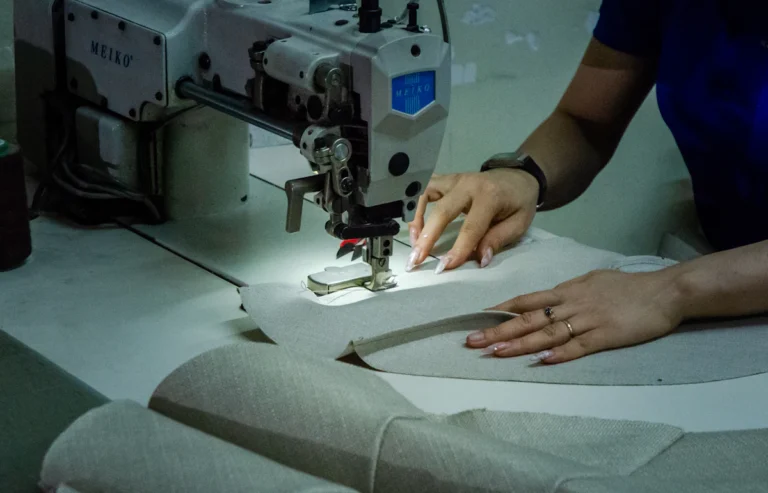
Each size on your chart becomes a graded pattern. The factory cuts neoprene to those patterns, so the chart and the patterns must be agreed together before sampling.
At Oath and Oak, we suggest sampling the two sizes you expect to sell most. Ask lifters at the edges of each range to try them, then adjust the range or the pattern where a sleeve feels loose or overly tight.
Thickness changes fit too. A 7 mm sleeve feels tighter and stiffer than a thinner one cut to the same pattern, so test each thickness separately.
Once the ranges are final, Oath and Oak can print the chart on your boxes and inserts. Our knee sleeves page shows the styles and thicknesses you can size this way.
Which Sleeve Sizing Mistakes Cause Returns?
Measuring a Flexed Leg
Flexed muscles add to the reading and push customers into sleeves that end up too tight.
No Calf or Thigh Note
Customers with big calves fit the chart yet cannot get the sleeve over the lower leg easily.
One Chart for Every Thickness
Thicker neoprene fits tighter, so a 7 mm sleeve rarely matches the chart built for 5 mm.
Hiding the Chart
A chart buried in a listing image is easy to miss, so place it near the size selector too.
Telling Everyone to Size Down
Size-down advice suits experienced powerlifters, not beginners buying their first pair.
What Else Do Buyers Ask About a Knee Sleeve Size Chart?
How tight should a knee sleeve feel?
Snug enough to stay in place and give steady compression, but not so tight that it pinches or causes numbness. Customers should be able to squat through full depth comfortably.
Should sleeves be sold in pairs or singles?
Pairs are standard for lifting, while singles suit customers who need support on one knee. If you sell both, keep the same chart so customers can mix and match sizes.
Can one chart work for men and women?
Yes, if the size range starts small enough. A unisex chart based on knee circumference fits most customers, and a few brands add extra small sizes for smaller lifters.
Should the chart use centimeters or inches?
Show both. Many published sleeve charts use centimeters, while US customers often measure in inches. Listing both units on one chart avoids conversion errors for every buyer.
Do sleeves stretch over time?
Neoprene relaxes slightly with wear, which is one reason powerlifters start with a tight fit. A training-fit sleeve should still feel supportive after many sessions if it was sized correctly.