
Written by the Oath and Oak Global product development team. Last updated October 2026.
In the full grain vs top grain leather belts question, full-grain keeps the complete outer surface of the hide, so it is the strongest and longest-lasting face for a lifting belt.
Top-grain has that surface sanded and refinished, which looks more even but removes some of the strongest fibers.
This guide is for brands choosing leather for weightlifting belts. It explains each grade, how tanning changes stiffness, how thick belts are layered and what to write in your spec.
What Do Full-Grain and Top-Grain Actually Mean?
A cattle hide has a dense outer layer called the grain and a looser fibrous layer below it called the corium. The tightly packed fibers near the grain give leather most of its strength and scuff resistance.
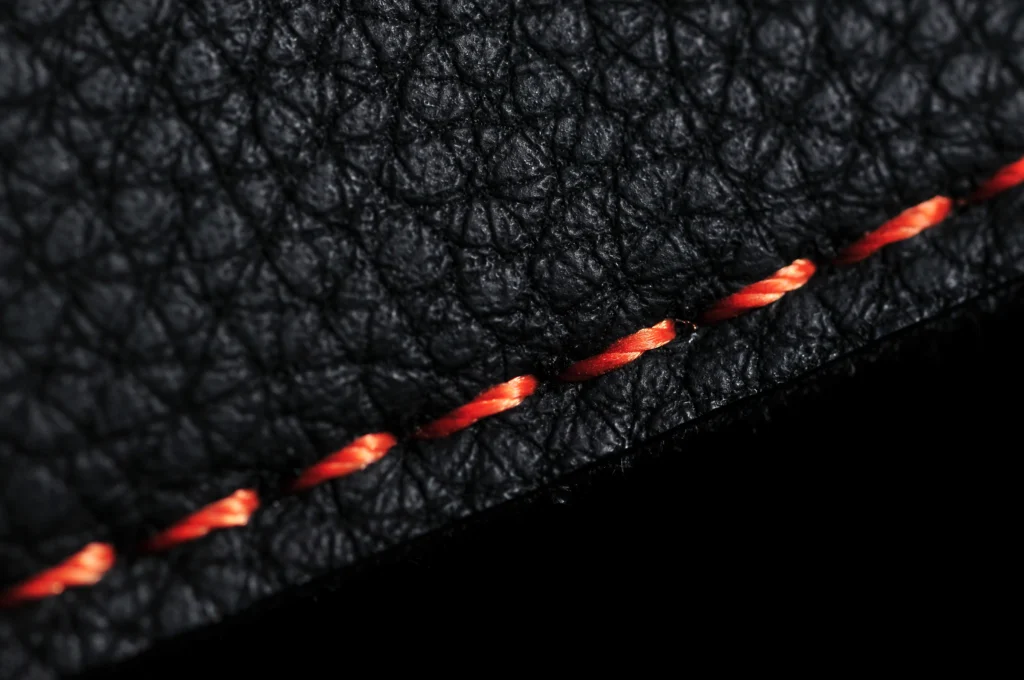
Full-grain leather keeps that outer layer intact. Natural marks and pores stay visible, and the surface darkens into a patina with use.
Top-grain leather comes from the same upper part of the hide, but the surface is sanded or buffed, then finished with a coating or an embossed grain pattern. It looks cleaner and more uniform.
When a hide is split into layers, the lower piece is split leather. It has no grain surface and is often finished as suede. Bonded leather is not a hide at all, but fibers mixed with binders and pressed into sheets.
How Do Belt Leather Grades Compare?
The table compares the four grades that appear in supplier quotes and where each one fits in a belt.
| Grade | Surface | Strength and Wear | Place in a Belt |
|---|---|---|---|
| Full-grain | Natural grain, marks visible | Highest, ages with a patina | Outer layer of competition and higher-priced belts |
| Top-grain | Sanded and refinished, uniform | High, slightly below full-grain | Outer layer of mid-range and colored belts |
| Split or suede | No grain, napped or coated | Lower on its own | Lining facing the body, or a core layer |
| Bonded | Pressed fiber sheet | Low, can crack and peel | Not suitable for lifting belts |
A suede lining is not a shortcut. Many powerlifting belts use suede inside because it grips clothing and stops the belt sliding during a squat. What matters is that the load-carrying layers are real hide.
How Does Tanning Change the Way a Belt Feels?
Tanning turns raw hide into stable leather, and the method changes how firm the finished belt feels.
| Tanning | Feel | Moisture | Belt Use |
|---|---|---|---|
| Vegetable | Firm, holds shape, softens slowly | Sensitive to soaking and heat | Stiff powerlifting belts |
| Chrome | Softer and flexible from new | Handles sweat and humidity better | Comfort-focused and bright-colored belts |
| Combination | Between the two | Moderate | Balanced training belts |
For a stiff squat and deadlift belt, firmness is the goal, so vegetable or combination tannage is common. For a general gym belt that should feel comfortable on day one, a softer tannage reduces break-in complaints.
How Is a Thick Lifting Belt Built?
Few belts are a single slab of leather. A typical 10mm or 13mm belt is built from layers that are glued, pressed and stitched.
Outer Layer
The visible face, usually full-grain or top-grain hide, which takes the logo by embossing or debossing.
Core Layer
Inner layers that build thickness and stiffness. Weaker leather can hide here, so specify it.
Lining
Suede or split leather facing the body for grip and comfort, stitched through the outer layers.
Edges and Stitching
Edges are trimmed, sanded and sealed, and rows of heavy thread hold the layers under load.
Oath and Oak measures total thickness through every layer. For competition lines, summaries of the IPF Technical Rules list a maximum width of 10 cm and thickness of 13mm. Check the current rulebook before printing any competition claim.
How Can You Check Leather on a Sample?
- Look at a cut edge: layered hide shows fibers, bonded leather looks like pressed paper
- Check the face under strong light: an even embossed pattern with no pores suggests corrected top-grain
- Bend the belt around your hand: it should flex without cracking on the face
- Measure thickness at several points: it should hold the same figure along the length
- Pull on the lining edge: it should not lift away from the core
What Should Your Leather Belt Spec Say?
A spec that only says genuine leather leaves too much open. Write each layer down so the factory and any inspector know exactly what to expect.
| Spec Line | Example of a Clear Entry |
|---|---|
| Outer layer | Full-grain cowhide, vegetable tanned, natural brown |
| Core | Hide leather layers to reach total thickness, no bonded leather |
| Lining | Suede split, black |
| Thickness | Total thickness with a tolerance, measured at three points |
| Edges | Sanded, dyed and sealed, color stated |
| Stitching and hardware | Thread type, rows, prong or lever with finish |
How Does This Affect Your Order With a Manufacturer?
When you choose between full grain vs top grain leather belts, grade and tannage become the biggest material lines on the quote, followed by thickness and hardware. Settling them early lets the factory source hides before your sample is cut.
At Oath and Oak, we sample the outer leather in the color you plan to sell, because dye and finish change how a grade looks. Hides vary, so each lot is matched to your approved sample for surface, thickness and stiffness before cutting.
A two-tier range often uses full-grain on the higher-priced belt and top-grain on the entry belt, with one pattern and hardware set. See our leather weightlifting belt, powerlifting belt and lever belt pages.
What Mistakes Should Buyers Avoid?
Writing Only Genuine Leather
The phrase covers several grades, so a lower one may be chosen than you expected.
Ignoring the Core Layers
A full-grain face over weak core layers looks right but wears out early under load.
Choosing Softness for a Squat Belt
A very soft tannage feels pleasant but gives less of the rigid support lifters want.
Approving the Wrong Color
Dye and finish change look and feel, so sample the exact color you will sell.
No Thickness Tolerance
Without a stated tolerance, small hide variations turn into disputes at inspection.
What Else Do Buyers Ask About Full Grain vs Top Grain Leather Belts?
Is full-grain always better than top-grain?
For strength and aging, yes. Top-grain can still make a good belt, and its uniform surface takes bright colors and printed logos well, so it suits some ranges better.
Why do some belts have suede on both sides?
Suede on both faces gives a soft, grippy look some brands prefer. The strength still has to come from hide layers inside, so ask what the core is made of.
How long does a stiff leather belt take to break in?
It depends on the leather and how often the customer trains. A firm vegetable tanned belt often needs several sessions to shape to the body, so say so on the insert card.
Can leather belts be made in bright colors?
Yes. Chrome and combination tanned leathers take bright dyes evenly. Vegetable tanned leather can be dyed too, but colors usually come out deeper and less uniform.
How should customers care for a leather belt?
Wipe off sweat and chalk after training, let it dry at room temperature away from heaters and apply leather conditioner now and then to stop the surface drying and cracking.
Where Should You Go Next?
- Custom weightlifting belts to compare leather, lever and nylon builds
- Weightlifting belt size chart to plan sizes
- Tech pack template to write your leather spec


