
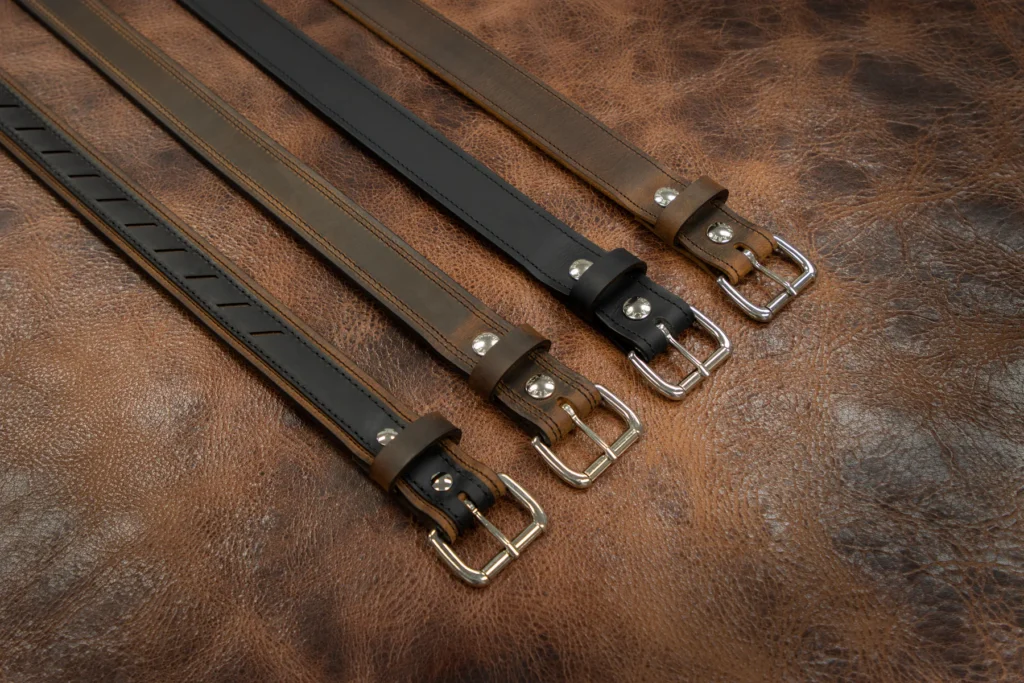
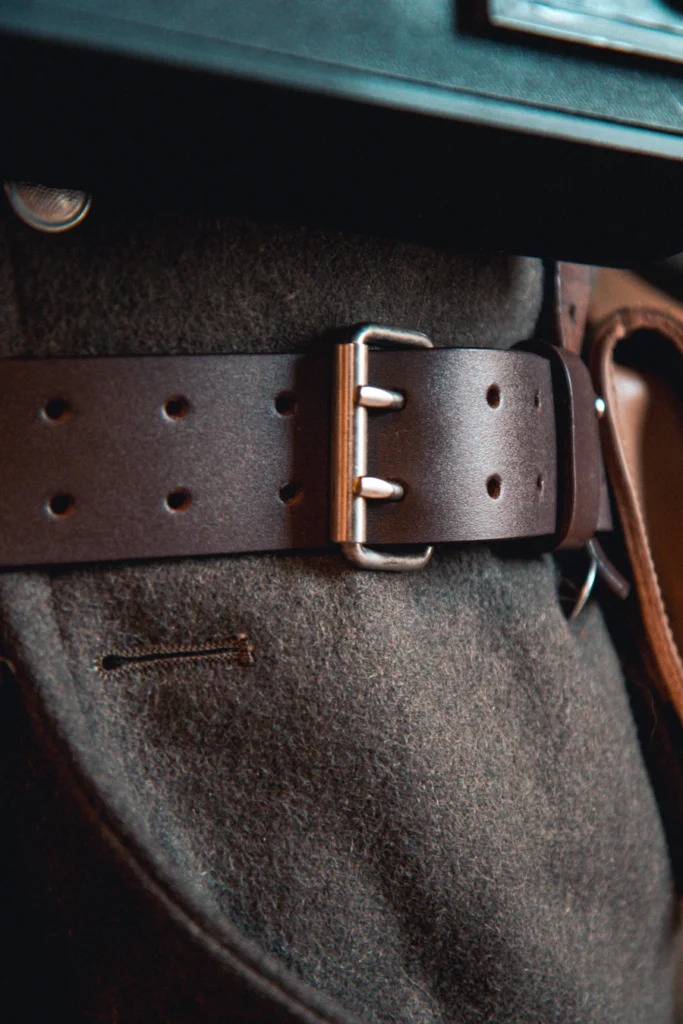
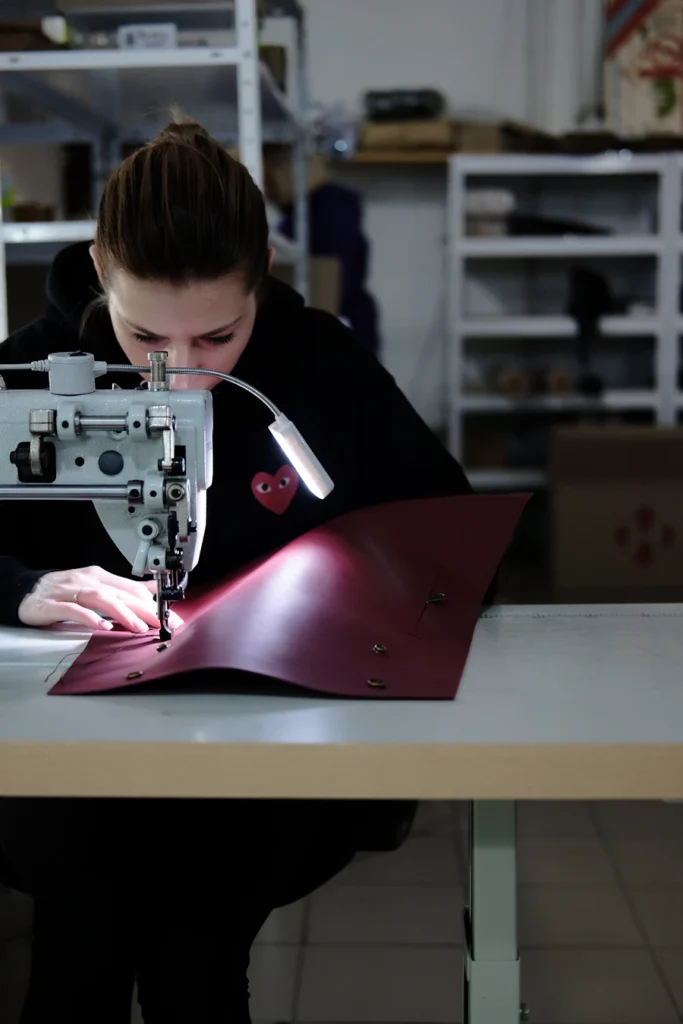
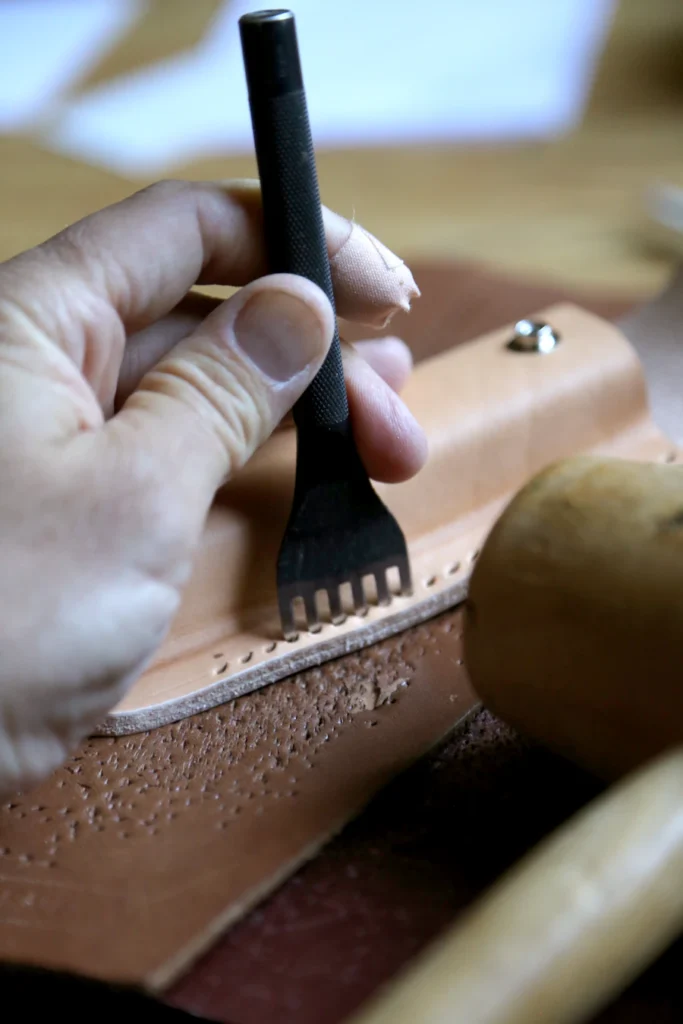
Our lever weightlifting belt pairs a stiff leather body with a steel lever buckle, and the Oath and Oak Global factory builds it for brands, gyms and distributors under their own label.
It is a leather lifting belt that closes with a hinged steel lever instead of prongs. The lever pulls the belt to a preset tightness and opens again with one flick.
Powerlifting customers favor it because the fit repeats from set to set. Prong belts still suit lifters who change tightness between exercises.
| Specification | Options |
|---|---|
| Body | Genuine leather, plain or suede-covered |
| Thickness | 10mm or 13mm |
| Width | 3 inch narrow or 4 inch standard |
| Lever | Steel lever and catch plate, fixed with screws |
| Lever finish | Polished steel, black or a colored coating |
| Adjustment | Rows of punched holes for resetting the lever position |
| Sizes | XS to XXL as standard, extended sizes on request |
A single-color leather body with a polished or black lever, the core product most strength brands launch first.
Suede on the outside for a soft, textured look that takes debossed and embossed logos with clean edges.
A slimmer body for shorter torsos and women’s ranges, where a standard belt can press into the ribs or hips.
Printed leather surfaces such as camo, leopard or brand patterns, for drop collections that need a bold look.
A lever belt has two metal parts: the hinged lever on one end and the catch it hooks into on the other. Both are fixed with screws through holes punched in the leather.
Moving one part to a different set of holes changes the size, so hole spacing has to be exact. The body itself follows our leather weightlifting belt build.
A custom lever belt carries your brand on two surfaces, the leather and the lever itself, so both are planned together.
| Element | Customization Options |
|---|---|
| Lever logo | Laser etching or engraving on the lever face |
| Lever color | Polished, black or coated to a brand color |
| Leather logo | Embossing, debossing or screen print |
| Leather color | Single colors or two-tone layouts |
| Stitching | Contrast or tone-on-tone thread |
Labels, inserts and other routes are listed on our customization page.
Each lever belt travels flat in a retail box with the lever closed and protected, so the metal plate cannot scratch the leather in transit.
Brand inserts, size labels and UPC or FNSKU barcodes are added at packing, and master cartons are filled by size for easy receiving.

Standard width suits most lifters. Offer the narrow version too, so shorter customers are not forced into one profile.
Each size covers a few lever positions, so customers should land in the middle of that range, not at the last hole.
Because the lever is set once, a clear size chart and a sizing note in the box prevent most fit-related returns.
The sample confirms the lever’s closing force, how cleanly the catch seats, and whether the hole spacing gives every size a usable range.
In the Oath and Oak factory, production punches holes from a fixed template and mounts every lever to the same depth, then each lot is compared with your sample. Any new lever design starts with our product development steps.
Every lever belt gets mechanical checks in addition to our standard quality control process:
A prong buckle threads through a hole like a trouser belt, while a lever snaps the belt shut at a preset tightness.
| Feature | Lever | Prong |
|---|---|---|
| Fastening | One movement to open or close | Threaded and pulled through each time |
| Changing tightness | Needs a screwdriver to reset | Moves to another hole by hand |
| Fit consistency | Same tightness every set | Varies with how hard it is pulled |
| Typical buyer | Powerlifting-focused brands | General gym and multi-sport ranges |
| Retail price | Higher | Lower |
Brands selling to competitive lifters usually lead with lever belts and keep a prong option for customers who share a belt or change weight often.
MOQ and timing depend on the leather, thickness, lever finish and logo work, and Oath and Oak sets both out in your quote.
Every weightlifting belt with lever hardware is quoted with its finish and logo method included. Send your size split and artwork through the form, and belts ship to you by air or sea freight.
Still have a question?
Send your product details for a quote, or reach Oath and Oak through the contact page.
Yes. Loosening the screws, moving the lever to another set of holes and tightening the screws evenly changes the size. A short instruction card in the box helps customers avoid stripping the threads.
Yes. The lever is held on by screws, so a replacement with the same hole pattern fits without changing the belt. We can quote matching spare levers in your finish alongside the belt order.
Usually the lever sits at the wrong hole position for that lifter. The fit should be snug enough to brace against while still letting the lifter breathe, and moving the lever one hole fixes most complaints.
Less often. Olympic lifters usually prefer tapered leather or nylon belts that stay clear of the hips, while lever closures sell mainly for squats, bench press and deadlifts.
Most brands add a size chart, the screwdriver needed to reset the lever and a care card. Including the tool saves customers a trip to the hardware store and cuts adjustment questions.