
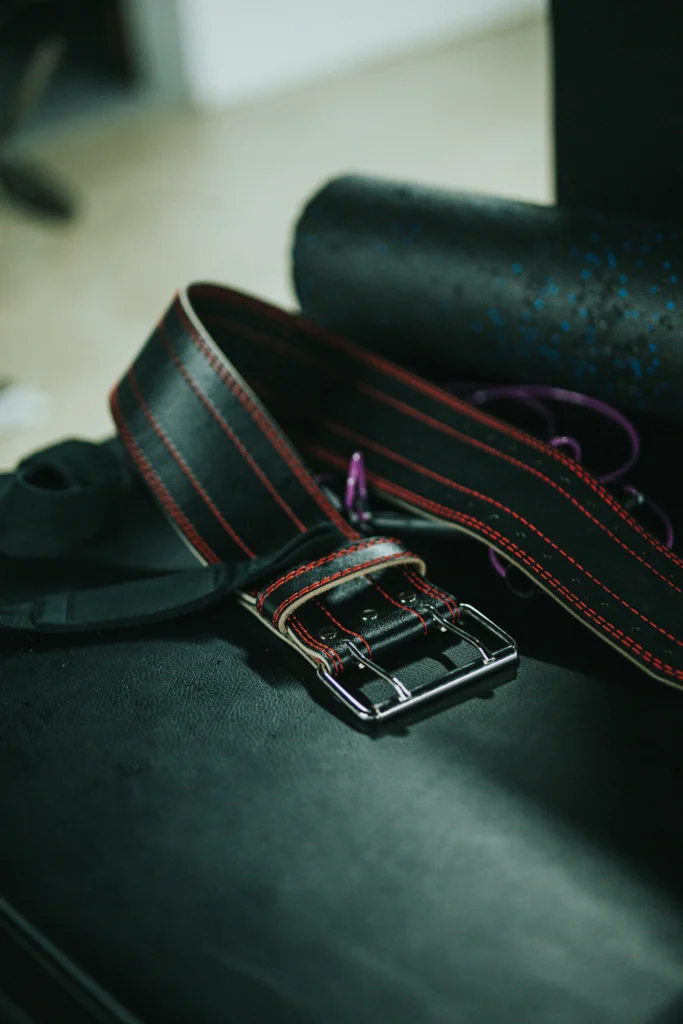
Our leather weightlifting belt is cut, layered and stitched in the Oath and Oak Global factory for fitness brands, distributors and online sellers that want a leather belt under their own name.
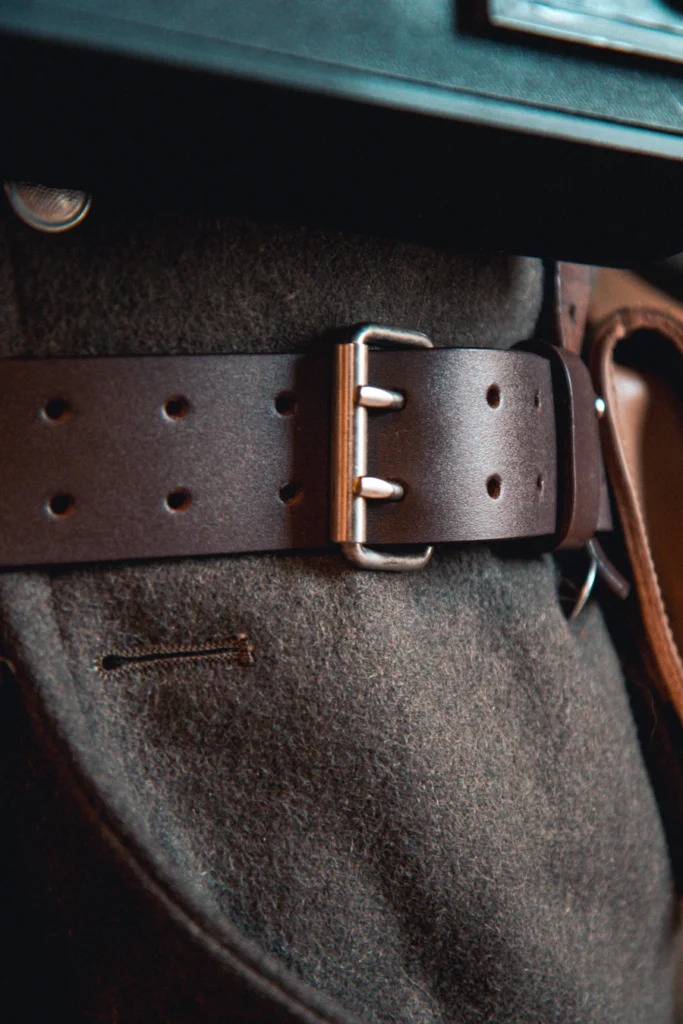
It is a stiff belt built from glued and stitched leather layers, closed with a metal prong buckle and worn around the midsection for heavy squats, deadlifts and presses.
Lifters brace their core against the belt, and leather gives a firmer wall to push into than webbing. That firmness is why strength brands usually lead their range with leather.
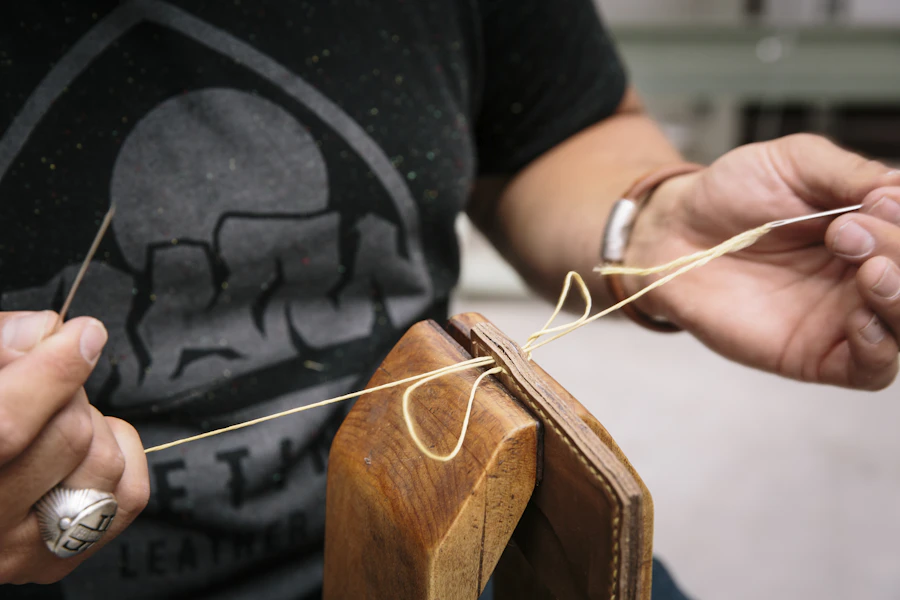
| Specification | Options |
|---|---|
| Leather grade | Full-grain, top-grain or split genuine leather |
| Tanning | Vegetable or chrome tanning, chosen at sampling |
| Thickness | 6.5mm for lighter training belts, 10mm or 13mm for stiff strength belts |
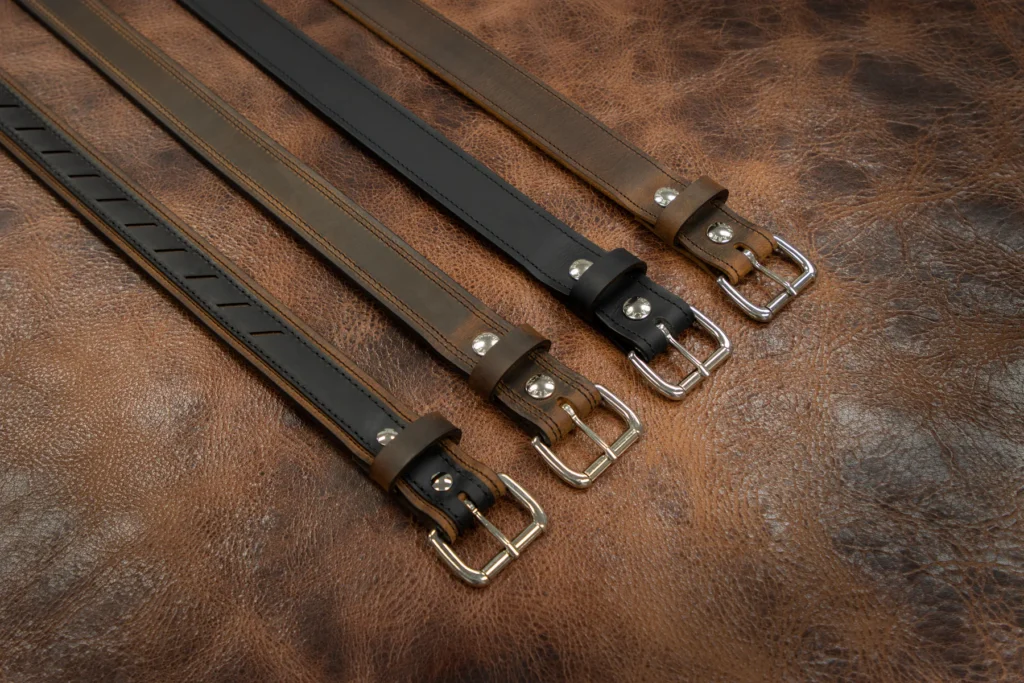
| Width | Uniform, wide back panel or tapered profile, shown in the styles below |
| Lining | Suede, nubuck or split leather |
| Buckle | Single-prong roller buckle or double-prong buckle in steel |
| Stitching | Stitch rows, pattern and thread color set to your design |
The same width all the way round. It is the classic profile for squats and deadlifts and the simplest leather belt to merchandise.
A wide back panel that narrows toward the buckle. Commercial gyms and bodybuilding customers know this shape well.
Wide at the back and slimmer at the front, so the belt stays clear of the hips in deep squats, cleans and snatches.
Suede applied to the outside, the inside or both, giving a softer hand-feel and a strong surface for an embossed logo.
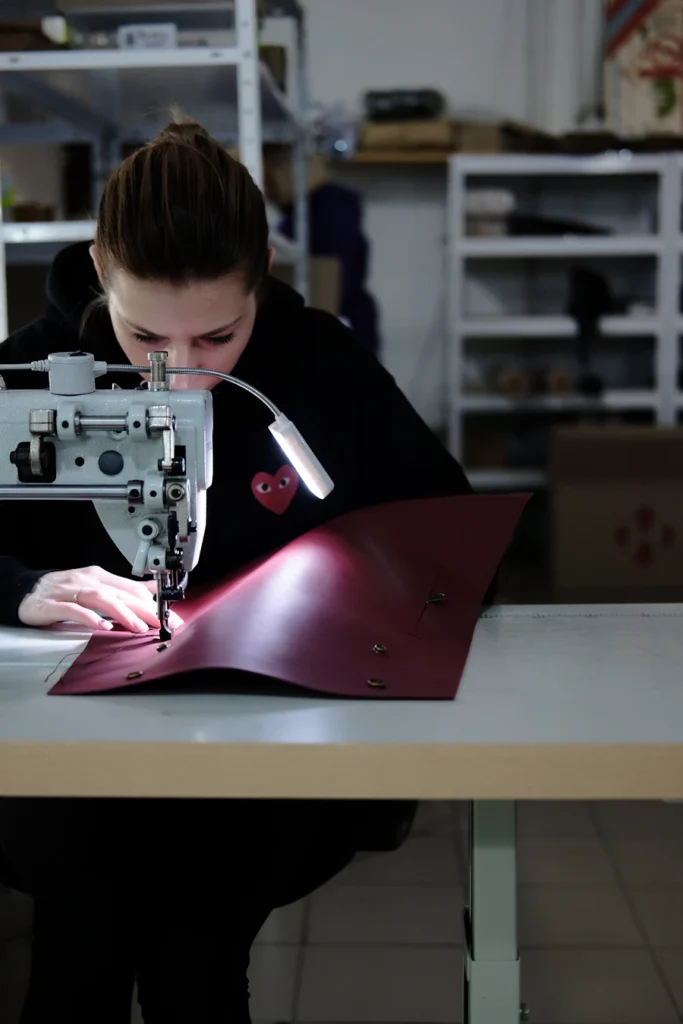
On the Oath and Oak production floor, each belt has an outer leather layer, a middle layer for stiffness and an inner lining, joined into one body. Rivets hold the buckle and the tongue loop in place.
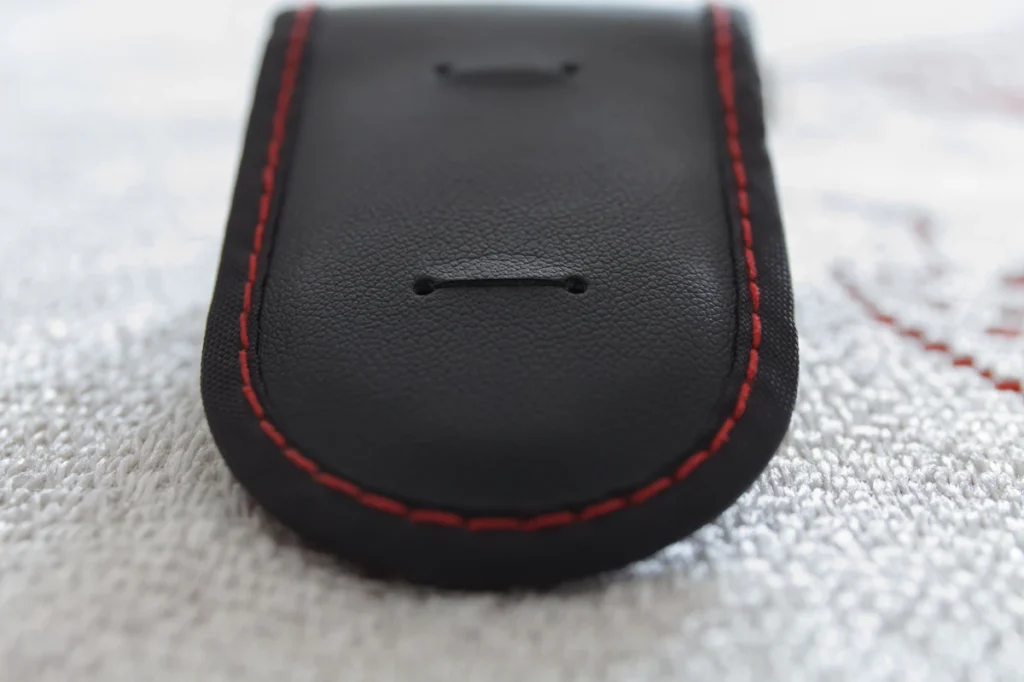
Edges are skived, burnished or painted, and the keeper is cut from the same hide so the finish matches. For a locking closure on a similar body, see our lever weightlifting belt.
A weightlifting leather belt with your logo pressed into the hide is often the hero product of a strength brand, so every visible part can carry your identity.
| Element | Customization Options |
|---|---|
| Logo | Embossing, debossing, laser engraving or screen print |
| Leather color | Natural tan, black, brown or a custom dye to your brand color |
| Edges | Painted in a matching or contrast color |
| Thread | Tone-on-tone or contrast stitching |
| Buckle | Polished, black or brushed steel finish |
Labels, inserts and other branding routes are on our customization page.
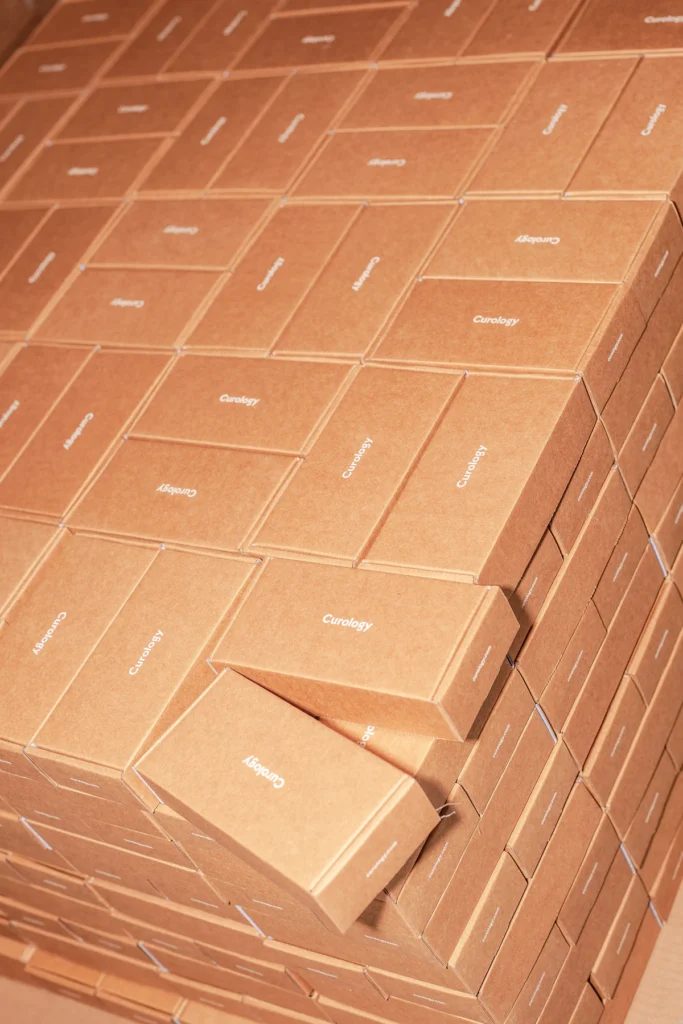
Each belt can ship rolled in a polybag, laid flat in a branded retail box or fitted with a hang tag. We apply UPC or FNSKU labels for retail stores and Amazon sellers.
Boxed belts go into master cartons sorted by size, so your warehouse can receive and count stock without opening every box.
| Size | Waist Measurement |
|---|---|
| XS | 22 to 31 inches |
| S | 27 to 36 inches |
| M | 31 to 40 inches |
| L | 35 to 44 inches |
| XL | 39 to 48 inches |
| XXL | 43 to 52 inches |
This is a common example chart. The lifter measures where the belt sits, relaxed, and your own chart is confirmed on the sample.
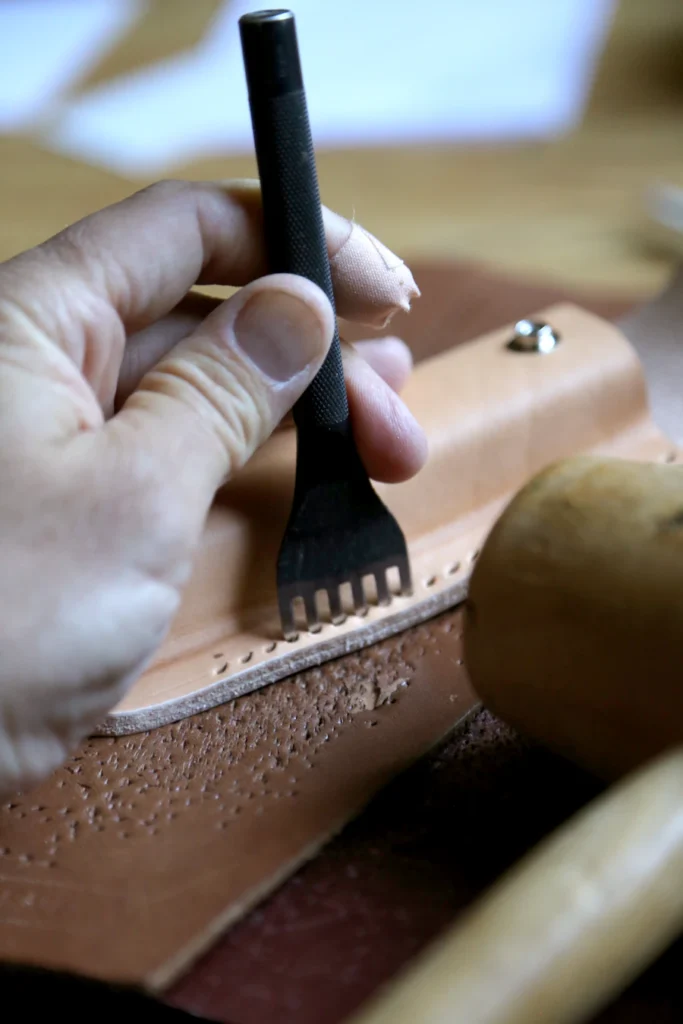
The sample confirms what buyers notice first on leather: how stiff it feels, how deep the logo sits and whether the buckle lines up with the holes.
In production, every hide is cut to the approved pattern, layered, stitched and finished, then compared with your sample. New belt designs pass through our product development steps before production.
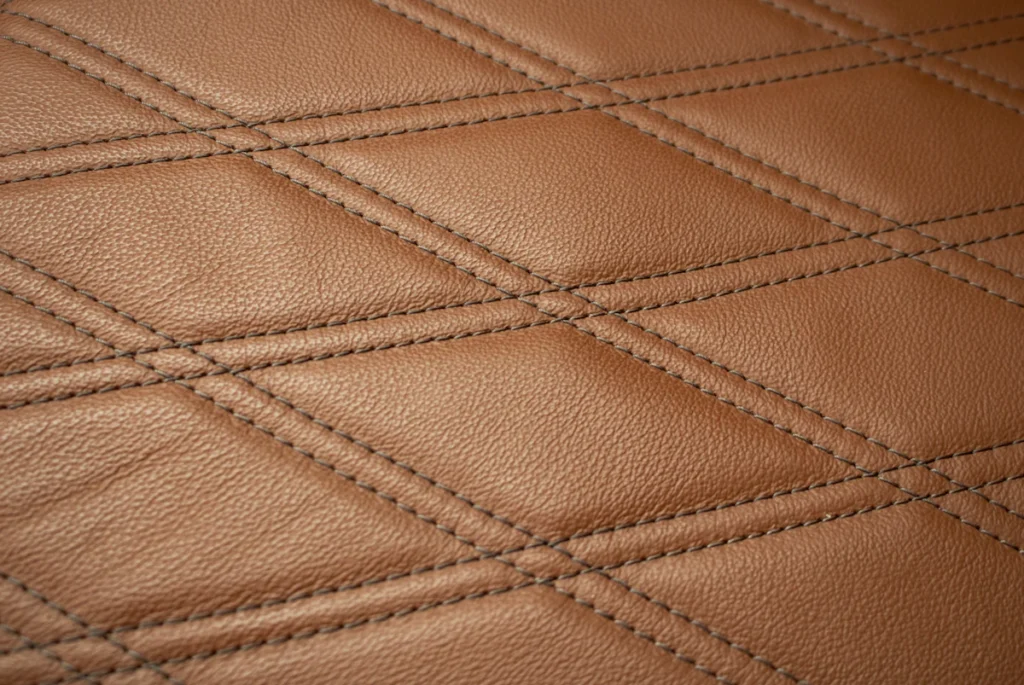
Our quality control process applies these checks to every production lot:
Full-grain leather keeps the natural outer surface of the hide, while split leather comes from the layer beneath it.
| Feature | Full-Grain | Split |
|---|---|---|
| Surface | Natural grain with visible character | Smoother, often coated or suede-finished |
| Strength | Densest, strongest fibers | Softer and weaker |
| Typical role | Outer layer of the belt | Linings and entry-level belts |
| Price position | Higher retail price point | Lower retail price point |
Many brands put full-grain on the outside and split leather inside, which controls cost without changing the face of the belt.
MOQ and timing depend on the leather grade, thickness, logo method and packaging, and Oath and Oak confirms both in your quote.
Brands ordering leather lifting belts for the first time often start with two colors. Send your size split and artwork through the form, and finished belts ship by air or sea freight.
Still have a question?
Send your product details for a quote, or reach Oath and Oak through the contact page.
It depends on thickness and tanning. A thick vegetable-tanned belt can stay rigid through many training sessions before it shapes to the body, while thinner or chrome-tanned leather softens sooner.
Vegetable-tanned leather stays firm and darkens with use, which suits a stiff lifting belt. Chrome-tanned leather is softer from the start and holds dye evenly, so it suits lighter belts and bright brand colors.
Wipe it with a damp cloth after training, let it dry away from direct heat and apply leather conditioner from time to time. Printing these steps on a care card in the box cuts down on support questions.
Yes. Belt thickness comes from the number and weight of the layers, so a stiffer belt is built by adding or thickening a layer. We confirm the final thickness on the sample before production.
Yes. Many brands emboss the main logo on the outer layer and add a smaller mark, size and care details on the lining, where the lifter sees them while fastening the belt.