
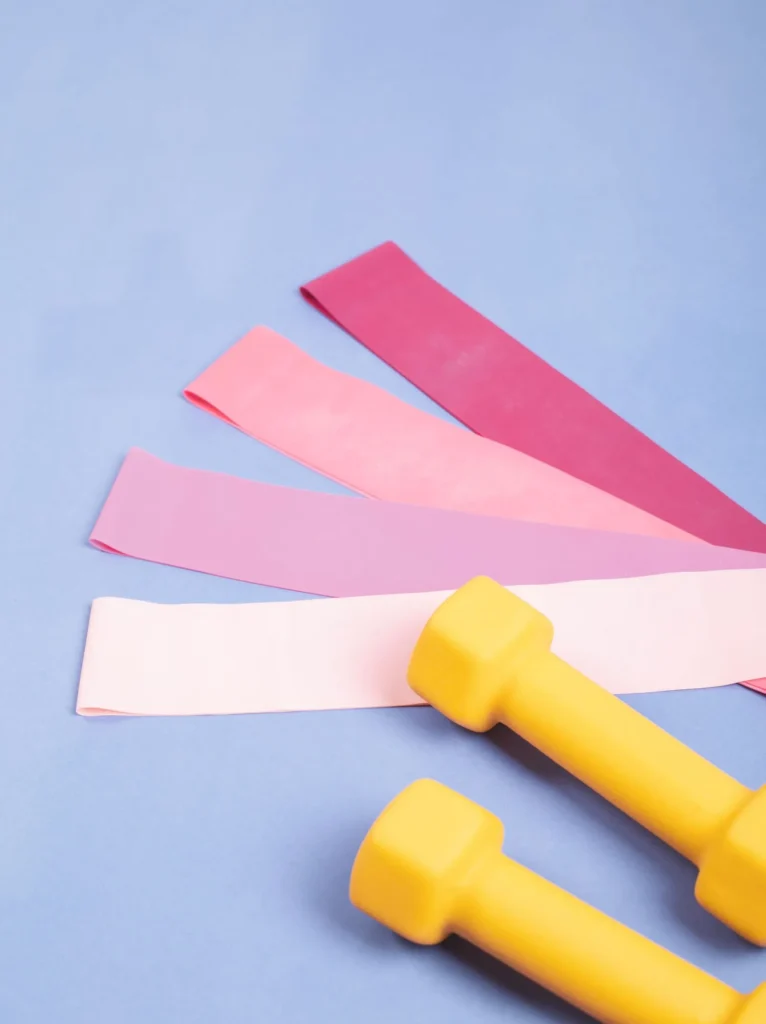
Resistance band colors follow no shared industry standard. Each brand sets its own order, so the same color can be light in one set and heavy in another, and only a printed rating tells customers the real resistance.
This guide is for brands planning a band range. It shows how well-known makers map colors to levels, how ratings are measured and how to build a color system your customers can read at a glance.
What Do Resistance Band Colors Mean?
Inside one brand, each color stands for a level, from the lightest band to the heaviest. Customers learn the order and pick a color instead of reading a label every time.
Across brands, the colors mean nothing on their own. A customer who moves from one maker to another has to learn a new order, which is why clear printing on each band matters so much.
Resistance itself depends on the band’s width, thickness, length, material and how far it is stretched. Color is only the code that points to those physical differences.
How Do Well-Known Brands Order Their Colors?
The table below lists the lightest to heaviest colors in three published ranges. Notice how purple is the lightest step in one set and one of the heaviest in another.
| Range | Color Order, Light to Heavy |
|---|---|
| TheraBand flat therapy bands | Tan, yellow, red, green, blue, black, silver, gold |
| Rogue Monster Bands, 41 inch loops | Orange, red, blue, green, black, purple, then wider bands |
| Serious Steel 20 inch deadlift bands | Purple, red, blue, green, black |
Both systems work well for their own customers. The point for a new brand is that copying any single order does not make your bands easier to understand, because shoppers already see conflicting codes everywhere.
How Is Band Resistance Measured?
Resistance is quoted at a set amount of stretch. TheraBand publishes values at 100 percent elongation, and Rogue also bases its Monster Band figures on a 100 percent stretch while noting that manufacturing variation makes them estimates.
Because resistance rises as a band stretches, a single number only makes sense next to the stretch it was measured at. Many brands print a range, such as a figure at light stretch and a higher figure near full stretch.
For long loops, width is the main lever. Rogue’s published bands run from a quarter inch wide at the light end to several inches wide at the heavy end, all at the same length.
Why Do Ratings Differ So Much Between Brands?
Two bands of the same color can differ widely because makers use different widths, thicknesses, lengths and latex compounds. Some test at 100 percent stretch and others at 200 percent.
Some publish a single figure while others publish a range, which makes side-by-side comparisons even harder for shoppers.
A layered latex band also behaves differently from a molded one, and fabric bands stretch far less than latex.
Comparing resistance band colors across brands therefore tells a customer very little. The printed figure and its test method are what count.
For your own range, choose one test method and use it for every level and every repeat batch, so your published numbers stay consistent over time.
How Should a Brand Build Its Own Color System?
Start with the number of levels your customers need, then assign colors in an order that feels natural, such as light colors for light bands and dark or bold colors for heavy ones.
Keep the same order across every band type you sell. If red means medium in your loop bands, it should mean medium in your mini bands and tubes too, so customers can move between products without relearning.
Avoid placing two similar shades next to each other in the order. Customers grabbing a band in a dim gym should never confuse neighboring levels.
What Should Your Color and Level Plan Include?
- A fixed color order used across every band format
- Level names or numbers printed on each band
- A resistance range with the test stretch stated
- A resistance band weight chart on the box or insert
- Distinct shades so neighboring levels never look alike
- The same colors in every repeat batch
Printed numbers also help customers with color vision deficiency, who may not tell red and green bands apart by shade alone. Numbers also survive faded colors after months of use and sunlight.
How Do Band Colors Affect Your Production Order?
Your color plan becomes part of the spec sheet. Each level needs a color reference, a width and thickness, the print content and the resistance range you plan to publish.
At Oath and Oak, colors are matched to your references on the sample set, and you test each level for feel before approving. Once approved, the same compound colors and dimensions are used for every repeat order. Each lot is checked against the approved set before packing.
Plan your resistance band levels and print layout together, so every band carries its level and range clearly.
Our resistance bands page shows the formats you can build this system around, and Oath and Oak can print the chart on your packaging.
Which Color Planning Mistakes Should Brands Avoid?
Relying on Color Alone
Unprinted bands force customers to memorize your order, and many will simply guess wrong.
Mixing Orders Across Products
A color that means light in loops and heavy in minis confuses buyers of both products.
Ratings Without Stretch
A resistance figure with no stretch length cannot be compared, so it misleads more than it helps.
Too Many Similar Levels
Steps that are too close in resistance feel identical, so customers cannot tell why both exist.
Shifting Shades Between Batches
A slightly different red on a restock looks like a new level and causes returns and complaints.
What Else Do Buyers Ask About Resistance Band Colors?
Is there a standard color order for bands?
No. TheraBand’s order is well known in therapy settings, but loop and power band makers use their own orders. Every brand should publish its own chart with printed ratings.
How many levels should a band set include?
Many sets offer five levels, from extra light to extra heavy, while power band ranges often reach seven or more. Choose a spread that matches how your customers train, and leave room to add a level later.
Can we use our brand colors for the bands?
Yes, as long as the order stays clear from light to heavy. Some brands use one brand color in several shades, while others pick distinct colors and print the level on each band.
Why do two bands with the same rating feel different?
Ratings depend on stretch length, band length and material. A short band at the same rating feels stiffer over a short movement, and latex and fabric bands behave differently.
Should fabric bands follow the same color order as latex?
Ideally, yes. Using one order across fabric, latex and tube products helps customers move between them, even though the actual resistance of each format will differ.